
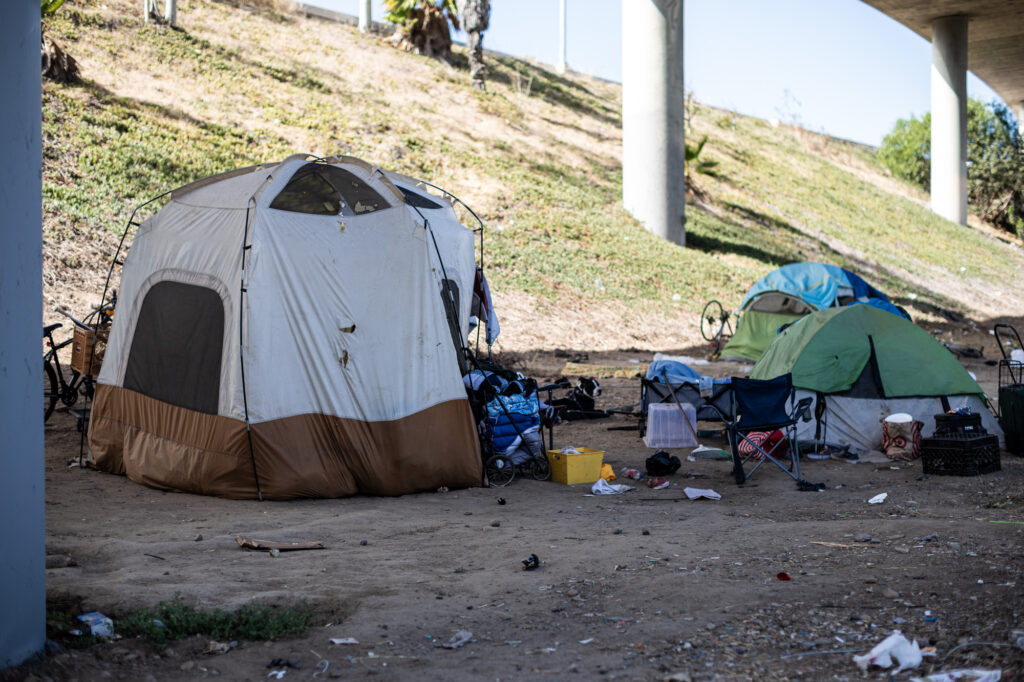
When somebody thinks of homelessness, they likely envision tents on sidewalks, canyons or other public places. Unsheltered people are the most visible of the homeless population and are generally the focus of cities seeking solutions to the crisis.
They do not represent all homeless people, however. The point-in-time count conducted in January 2026 found 9,803 homeless people in the county. Of those, 5,108 people were living outdoors while the rest were in some type of shelter or temporary housing.
That count was seen as progress, especially with the unsheltered population. The 2026 count found an overall decrease of just 1%, but an 11% decrease in the number of unsheltered people.
Viewed another way, 58% of homeless people in San Diego County were living without shelter in 2025, and 52% were without shelter the following year.
An oft-repeated claim that many people living outdoors routinely decline offers for shelter overlooks the reality that shelters often are full, and requests for beds are turned away every day.
Life on the street can be perilous. Traffic fatalities, drug overdoses, food insecurity, injuries and diseases can be daily occurrences, and the life expectancy of unsheltered people is said to be 15 to 20 years less than the general population’s.
For the people who do turn down offers for shelters, cities have responded by offering other options such as safe parking lots for people who live in vehicles and safe sleeping sites that provide a secure and legal place for people to live in tents.
Those relatively new options have contributed to a reduction in unsheltered homelessness in parks and sidewalks and also come at a time when enforcement against encampments has increased.
Enforcement of encampment bans had been stymied following the 2009 decision in the Martin v. City of Boise lawsuit that ruled that cities cannot cite people for sleeping in public places if there are no shelters or other alternatives available. Some cities responded by offering temporary housing with hotel vouchers, allowing encampments to be legally cleared.
The Boise decision was overturned in 2024 by the U.S. Supreme Court’s ruling in the City of Grants Pass v. Johnson case, allowing cities to again legally cite individuals for sleeping on public property.
Since then, San Diego and other cities in the county have adopted encampment bans. Those alone, however, have not cleared all tents from public places because there still are not shelter beds to accommodate everyone living outdoors.
Shelters, safe parking, safe sleeping sites and hotel vouchers aren’t the only options for getting people off the street. Progress has been made through reunification programs and diversion strategies that often result in less-costly and longer-term stability.