
Jan. 28, 2026
People struggling with homelessness, addiction, domestic violence and other issues soon will help just a phone call away with the launch of a new service focused on East County.
Grossmont Health District has provided a $200,000 grant to establish a new call center that will be operated by the nonprofit East County Transitional Living Center. Besides ECTLC, grant recipients also included New Vision Counseling in La Mesa and Genesis Recovery.
ECTLC CEO Julie Hayden said the new service will augment, not replace, San Diego County’s existing 211 phone line that connects residents to thousands of resources for various services.
Skylar Phillips, resource manager for ECTLC, said one of several ways the new line will differ from the county line is that calls will not just be incoming, but also outgoing.
“The whole idea is that it’s going to be a continuum of care, so we’ll be able to reach out to participants who are on the wait list (to the ECTLC shelter) who might not be able to get in and offer them services while they’re in that transition period,” he said.
Phillips said people who have graduated from an ECTLC program also may receive calls from people at the center as a way of checking on them in case they need more support. The center will connect people to a variety of services, including where to get meals if they are dealing with food insecurity.
One call center will be in La Mesa and another at ECTLC in El Cajon, with each site staffed by five people. A number to call has not yet been decided, but the centers could be up and running by the end of February, Phillips said.
Hayden, a member of the executive committee of the County Behavioral Health Advisory Board, said the idea for a new call center came from discussions she and others on the board.
“I saw the biggest need in San Diego is that we’re not centralized, we’re fragmented,” she said.
“It wasn’t that there were not a lot of resources, but people don’t know how to navigate the system, Hayden continued. “It’s a little hard to navigate, especially if you’re in crisis.”
People who call the free, countywide 211 number are given options to seek resources for various types of issues. Options include speaking with a person or listening to recordings.
Hayden said that usually means people are given a list of resources to call, which sometimes leads to other frustrations because the list may be outdated or have phone numbers that aren’t answered when called.
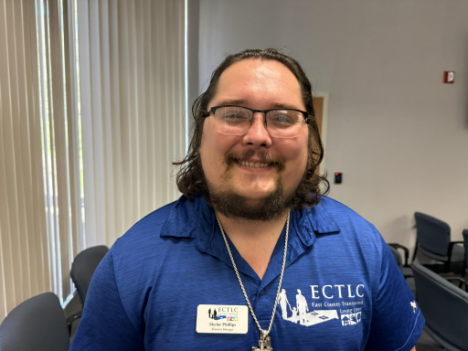
Skylar Phillips of East County Transitional Living Center.
Photo by Gary Warth
“It’s just hard,” she said. “In the end, people don’t get help.”
Rather than giving callers a list, Hayden said they would be connected to one of their partners for help.
“We would just hold their hands a bit more through that process,” she said. “We already have a lot of resources, so we can handle if somebody needs emergency housing or transitional housing or drug treatment. There’s a lot we can do.”
There also will be high-level clinicians mentoring people answering phones, she said.
“If you don’t move very quickly with people, then you lose them, especially when addiction is involved,” she said. “So our goal is to hang on to them tight, you know, not just give them a list, but really warm handoff to whatever place could help them and just keep fostering the relationships with the facilities that we are going to use.”
The call system will use Zoom and will be able to keep track of callers’ information so they will not have to repeat their situation to another person if they are disconnected, Hayden said.