
Oct. 15, 2025
A large homeless encampment in Lemon Grove had been a sore spot in the city for years. Past efforts to clear it had been unsuccessful, and residents and business owners were growing impatient with city officials.
Then in August 2025, a team of service providers and homeless practitioners moved in, backed with an $8.4 million grant from the state’s Encampment Resolution Fund. The goal was to provide housing over two years for 102 people and provide services for 170 people in all.
Crews from the city of Lemon Grove, Impact Group, Crisis House, Brilliant Corners and RTFH (Regional Task Force on Homelessness), the lead applicant for the state grant, worked together over five weeks to completely clear the encampment and find homes and wraparound services for about 30 people.
These are the stories of how it happened, who was helped, and the businesses, residents and city officials cheering on the change.
Lemon Grove ERF 10: Closing Time
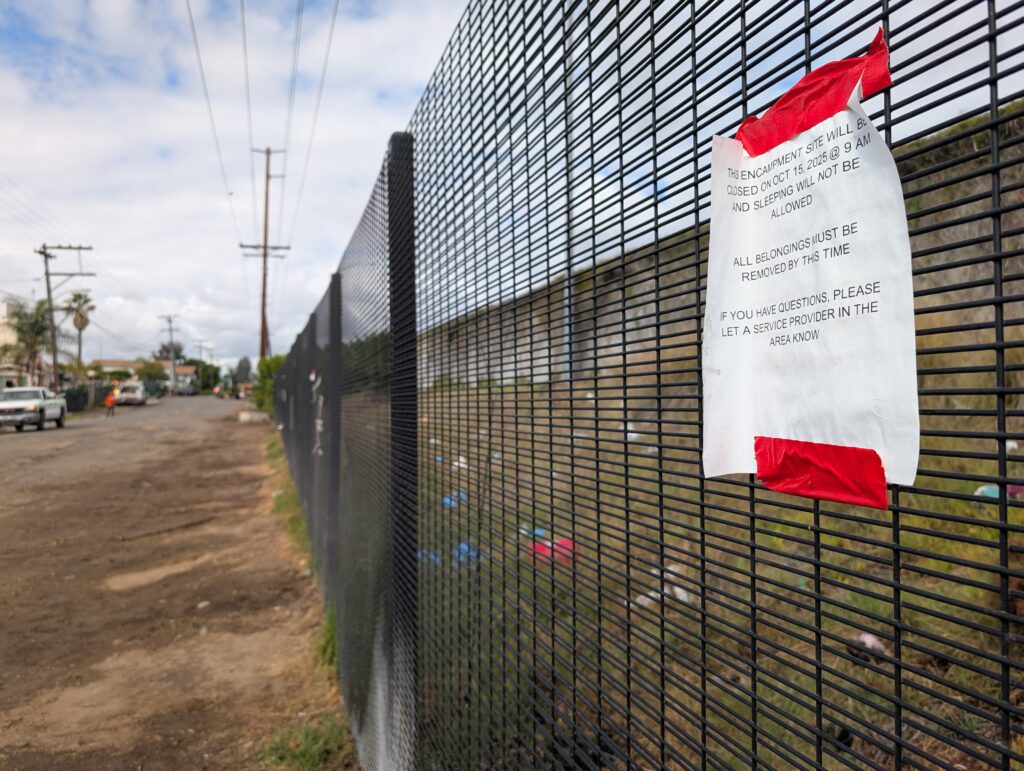
The final person was housed, the North Avenue encampment was closed, and city crews scooped up and hauled away discarded tents and other debris from the roadside. Enforcement against camping on the street would now begin.
In just over eight weeks since the crew first began its outreach, 29 people who had been living on the street now had homes and an opportunity to find help for mental health issues, substance addictions and employment.
A few days after the official Oct. 15 closing date of the North Avenue project, RTFH Encampment Initiative Program Manager Daniel Sturman said the team was still working on housing one more person from the street and was looking for a second person they had worked with.
During clean-up operations following the site’s closure, the team worked with sheriff’s deputies and may have saved the life of one more inhabitant of the encampment. They entered an abandoned building and found a dog tied up.
A foster family for the dog has been found, he said.
“The Public Works team did an amazing job cleaning the area, and everyone that I spoke to couldn’t remember when the street was this clean,” Sturman said, adding that most of the trash left to clean up was not from encampments, but from community members who used the street as a dumping ground.
North Avenue had been cleared, but the work was far from over.
Crew members from RTFH, Crisis House, Think Dignity, the Impact Group and Brilliant Corners were scheduled to take a couple of weeks off, then return to Lemon Grove to do a similar project at another encampment.
The $8.4 million grant from the state’s Encampment Resolution Fund (ERF) that paid for the North Avenue project runs through the end of June 2027 and will allow similar work at other Lemon Grove encampments with a goal of housing 102 people and providing services for 170 in all.
Portland Bates, senior management analyst for Lemon Grove, said the North Avenue site was selected to be first on the list because it was the largest in the city and had drawn the most public attention.
Many residents had expressed frustrations at a perceived lack of action by the city in clearing encampments, but Bates said there was only so much that could be done under the law to keep the street clean while not violating the civil rights of people living there.
Without a shelter in the city or funds to provide housing, forcing people from one encampment site would result in a new encampment at another site. Housing people through the model used in Lemon Grove allowed the city to clear North Avenue without moving the problem to another neighborhood, Bates said.
“There will be enforcement,” he continued, referring not just to North Avenue but all future encampment sites in the city. “The plan is that once we close down an encampment site, people will not come back. We’re telling people ahead of time, ‘You can accept services, but once this shuts down, you have to go.'”
Homelessness is not solved just by housing people who are living on the street or in shelters, however. The unfortunate reality is people become newly homeless every day, and more attention must be paid to the inflow.
In Lemon Grove, the city has identified $250,000 to work on homeless prevention programs. During a September presentation to the City Council on the night they adopted their homeless action plan, Bates told council members that the city was able to set aside money specifically for prevention because the ERF project was helping people already homeless.
More money to address homelessness and other issues in Lemon Grove will come from Measure T, a one-cent sales tax voters approved in November 2024 that is expected to generate about $6 million annually for 10 years.
The strategy used on North Avenue does not have to end in Lemon Grove. Kris Freed of the Impact Group and consultant Melanie Zamora said the model can be replicated and customized for other cities, just as they had done earlier that year in Carlsbad and Oceanside and next would do in Riverside.
“It’s very simple,” Zamora said. “You have a group of people who need to move out of a very precarious situation. You align the resources that exist, whatever those resources are. Resources for us are a housing subsidy and supportive services.
“And then you match the person from the group to the resources and move them into permanent housing,” she continued. “And then the supportive services are applied once the person moves into permanent housing to help them stabilize and never become homeless again.”
Zamora said the strategy also flips how prioritizing has been done.

Levi-Giafaglione of RTFH hugs a do found wandering North Avenue in Lemon Grove. Photo by Gary Warth
Under a traditional coordinated entry system, people are prioritized for housing based on their needs, with the most vulnerable receiving the highest priority, Zamora said. Under the model used in Lemon Grove, the encampment itself was the priority, and everybody there was offered the same services and housing.
“We are making sure that there are enough resources so we don’t have to prioritize people in a certain group,” she said. “We don’t have to say in this encampment, ‘We’re ranking you, so this person goes into housing first and this person goes into housing second.’ We are saying this entire geography is prioritized for a resource because encampments are so dangerous.”
Clutch Consulting first used the model in major cities including Dallas, New Orleans and Oklahoma City, and the U.S. Department of Housing and Urban Development also has used it as part of its Special Needs Assistance Projects (SNAP) teams, said Zamora, who has consulted for both.
“Clutch Consulting really refined a lot of practices, and The Impact Group has refined a lot of practices, and HUD has refined practices with its own adjacent model,” she said.
While the model overall is the same, Zamora said The Impact Group makes it a custom fit to different cities to match their funding source and service providers.
Zamora said she can see the model catching on in other cities.
“I do, because it’s effective,” she said.
Freed said the model also will be a long-lasting benefit for cities.
“Residents won’t have to worry about that encampment being repopulated,” she said. “It really makes a difference because communities can feel it. When a city says, ‘We’re working on this, we’re getting people housed every year,’ that means nothing when people didn’t see it when they looked at North Avenue. This gave them an opportunity to see a win.”