
First in series of four
August 2026
“Service resistant.”
It’s one of the most repeated phrases in public discussions about homelessness. People living on the street routinely turn down offers of shelter or services, it’s said, because they choose to be homeless.
The belief can shape policy decisions. In El Cajon, which had a 39.5% drop in homelessness but still had 208 people living without shelter this year, the City Council in July withdrew an application for a $5.3 million state Encampment Resolution Fund grant partly on the perception that the results may not be worth the cost.
City Manager Graham Mitchell also questioned how effective the program would be at housing or sheltering people.
“If we had $5 million over the next two and a half years, how many more people could we get into housing?” Mitchell said. “Because remember, someone has to agree to go. At most of the cleanups that we do, 90% say, ‘I’m not interested.’ It may be even higher than that.”
Chula Vista City Councilmember Jose Preciado made a similar statement at the council’s Aug. 18 meeting.
“One of the biggest challenges we have is that most of our unhoused will not accept services,” he said.
They’re not entirely wrong. Homeless people often turn down offers of shelter, rehab or other services when approached by an outreach team.
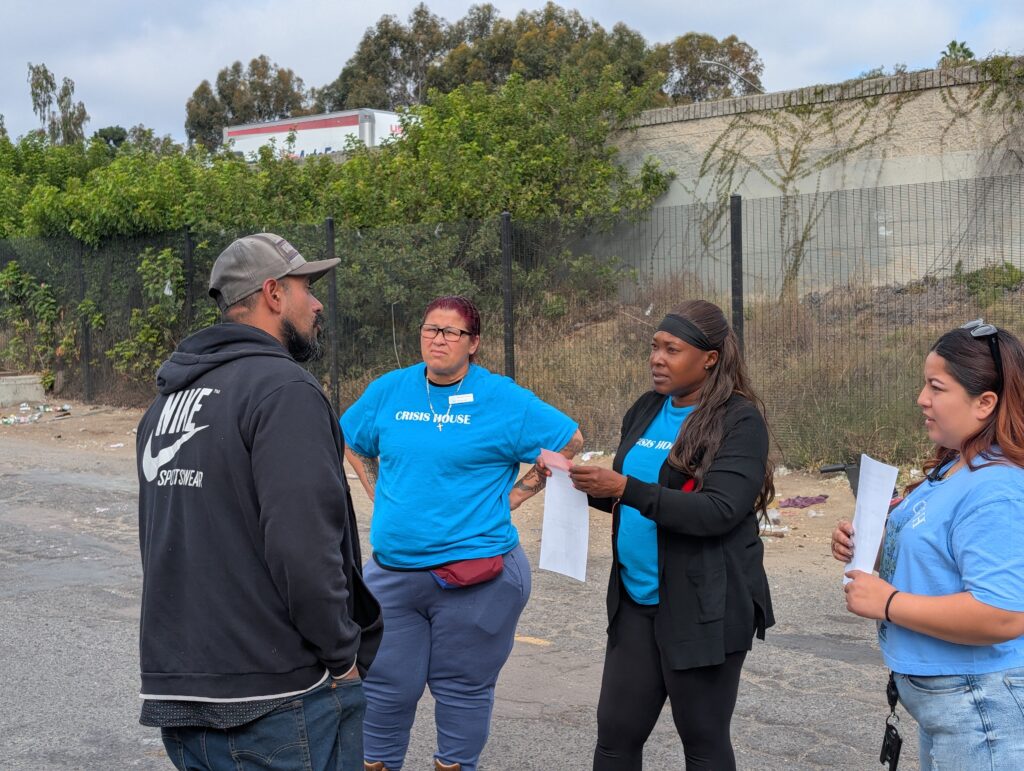
Those outreach team members, however, say they do not give up after their first meeting. Or the second, third, fourth or more. It may take weeks or even months to finally build relationships and trust with people, they say.
San Diego Rescue Mission Chief of Staff Paul Armstrong made that point to the Encinitas City Council in February when he challenged the term “service resistant.”
“It’s just that we haven’t been able to connect with them yet,” he told council members.
Encinitas had contracted with the Rescue Mission three months earlier. and the nonprofit had been doing outreach in Vista for the previous two years.
Armstrong said that when it arrived in Vista, they were told most homeless people in the city had rejected offers for help. That changed over time, he said.
“They may start with ‘No,’ but when they see us every day for 45 or 60 days, it starts to become a real possibility,” he said. “When we started in Vista, about 80% were refusing services. Within two months, we flipped that and had 85% asking for services.”
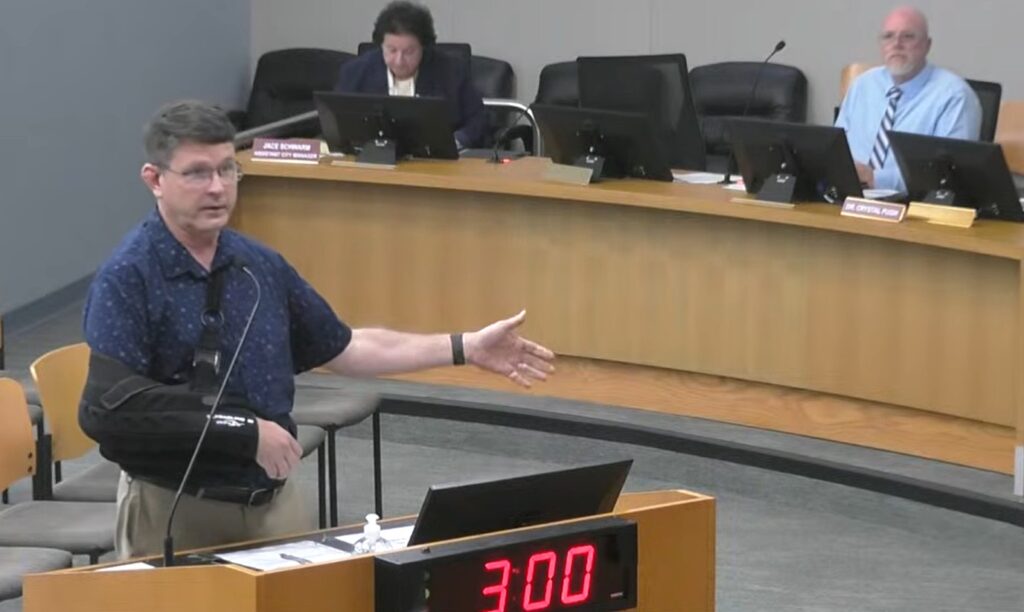
A screenshot of the Encinitas City Council’s Sept. 16 meeting shows San Diego Rescue Mission Chief of Staff Paul Armstrong addressing the council.
Like El Cajon, Encinitas declined to apply for a state Encampment Resolution Fund grant.
RTFH Community Engagement Manager Jan Walton has performed outreach services for 20 years, including the past 11 in San Diego.
“You have to talk to people more than once because people don’t trust you,” she said about approaching a homeless person during outreach. “No one wants to give you their information and share all these things with you and be vulnerable. Who wants to be vulnerable at a place where you are living in trauma?”
Walton said some people are hard to reach because they may have given up hope and don’t see a way out.
“If you’ve ever been discouraged in anything and there’s a person trying to give you encouragement, you might be like, ‘I just don’t see it,’” she said.
Adding to the situation, some homeless people may have become skeptical about offers of help because they have had encounters with other outreach workers who disappeared or didn’t follow through.
Edward Aguero, outreach coordinator for East County Transitional Living Center, said success with clients begins with the attitude of the outreach worker.
“You have to go in with an attitude of, ‘This might just be an act of kindness,’” he said about his approach of slowly getting to know someone living without shelter. “This might just be me handing them a snack, some socks, and then ‘God bless you’ and walk away. Because that right there is planting a seed. It will eventually grow.
“The next time you come, they might even look at you with a smile,” he said. “You might get a little more conversation. They might even tell you their first name. So, it takes multiple times and multiple encounters to get any kind of results because they automatically are on guard to anyone coming in or approaching them, because they already feel they have been pretty much cast out.”
Aguero said the slow approach leads to a better understanding of a person’s life experience and needs, which can lead to breakthroughs.
“Caring is more than just tossing them a hamburger,” he said. “Caring is asking their story, wanting to know more about how they got there, how they are feeling.
“So, that whole thing about them not wanting services is completely false,” he said. “Because they do want it. They want to know it’s genuine. And it takes a lot more than just dangling stuff and then saying, ‘Hey, I got a program for you’ or ‘I got this for you.’”
Once trust is built, Aguero said, breakthroughs can happen.
“You’ve got to earn that trust with them, build a relationship with them,” he said. “And once they start opening up to you, they’ll start to tell you their story. And that’s when it really gets powerful. And you can really process information that they’re giving you into how you can really help this person.”
Oceanside Homeless Services Manager Tameka Tates made the same point in a Sept. 2 presentation to the City Council about progress the city had made in addressing homelessness.
In May, the council had approved a new civilian-led Homeless Evaluation Assistance and Resource Team (HEART), which would replace the police-led Homeless Outreach Team.
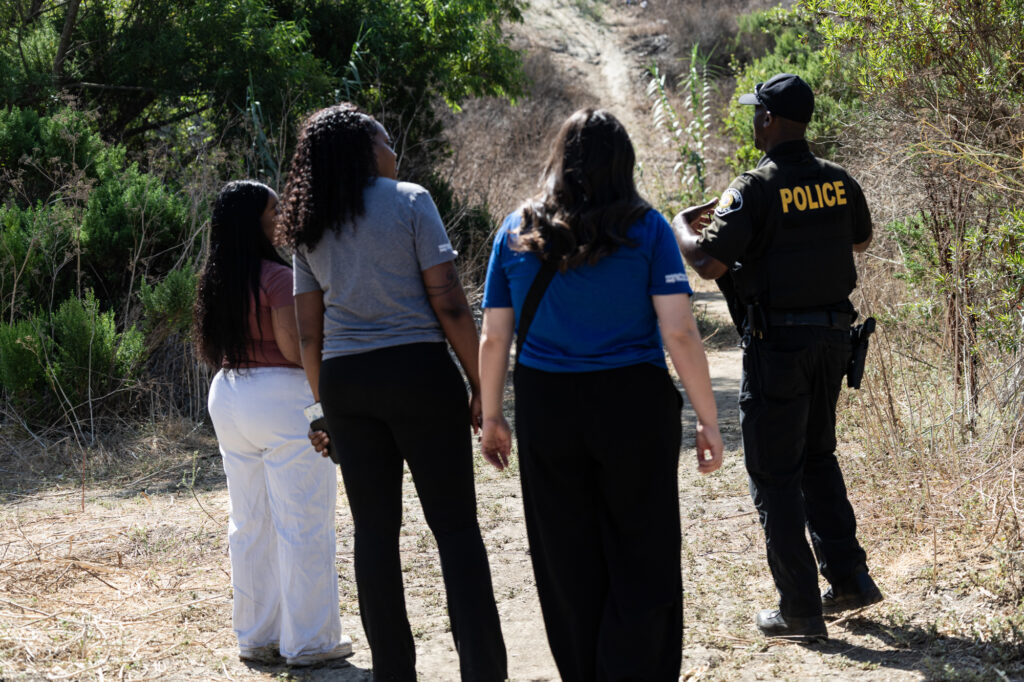
Outreach workers from Interfaith Community Services work with an officer from the Oceanside Police Department Homeless Outreach Team. Photo by Arash Tebbi
“A key part of HEART is relationship building,” she said. “We know that individuals may not accept services the first time we engage with them, so consistent outreach helps build trust, identifies their needs and barriers, and connects them to the right services.”
Miguel Figueroa has been an outreach worker since 2019 and has advice for anyone in the field.
“Don’t take anything personally, expect rejection, and never give up.”
Figueroa, who has worked for People Assisting the Homeless (PATH) and Father Joe’s Villages, said outreach workers may encounter people on drugs or with mental illnesses, which comes into play when making first contact with them.
“You have to take all of that into consideration because you’re a stranger to them, so they’re not going to want to open up to you,” he said. “That’s why you go ahead and expect rejection. They’re not going to want to open up right away.
“Outreach workers have to not take that personally and understand that they might be going through something that we can’t know,” he said.
Consistent contacts and interactions with someone living without shelter over weeks or months can build up a rapport with the person, Figueroa said, adding that outreach workers should not expect immediate success stories.
“You don’t know the person and they don’t know you,” he said. “And you’re not the only individual out there telling them that they can get into housing or shelter or get this or that.”
PATH outreach worker Cindy Smith also said building trust and having patience are key.
“They need to see people a few times before they start to trust you and think, OK, this person is for real,” she said.
Smith said that at PATH she usually meets with homeless people who have called the county’s 2-1-1 number to seek shelter or other help, further dispelling the notion that they are not interested in any assistance.
She recalled being at a recent resource fair and seeing a homeless man who had liquor and marijuana but wanted to be sober.
“It was really amazing to me that this guy had a bottle of liquor and a bag of marijuana and he dumped the liquor out right there and then threw the marijuana in the trash, and he went to treatment right there on the spot,” she said. “But he had been working with a case manager, and that does take time where they start to trust you. They’re not always receptive to services right at the beginning.”
Smith said there can be barriers to overcome, including dealing with some homeless people who have given up hope and believe they aren’t deserving of shelter or housing.
Another barrier is convincing them that outreach workers aren’t trying to help simply because it’s their job.
“They think we don’t really want to help,” she said. “I’ll tell you, most case managers really do care about all the people. I mean, in order to even do this work, you have to have some compassion for the individuals that we serve, and so we have to convey that message to these clients that we talk to, that we do care and we do want to help you.”
Part two: Outreach workers work toward success one day at a time