
May 26, 2026
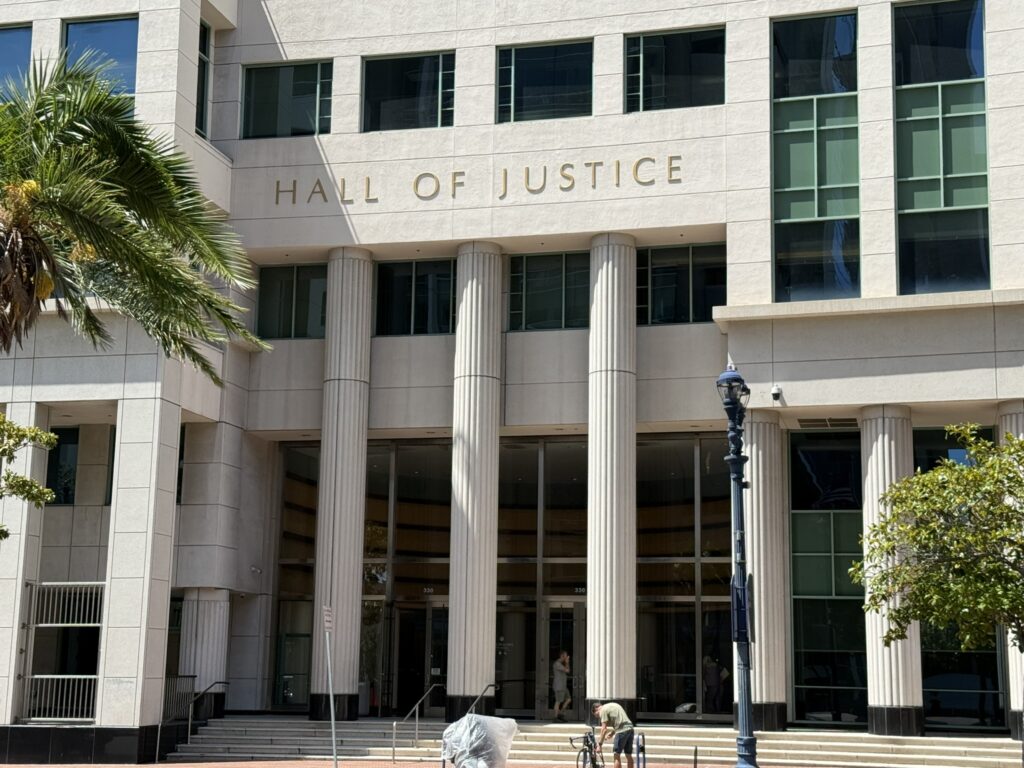
At 8:30 a.m. every Monday, a hallway outside a downtown courtroom is lined with people sitting nervously. The docket on the doorway lists about two dozen cases, all for the same hearing: “Unlawful detainer court trial.”
In layman’s terms, the hearings are eviction trials. Most likely the hearings are the result of a tenant who is behind in rent, and a judge’s verdict could ultimately lead to a sheriff’s deputy locking an individual or family out of their homes.
It’s also likely that the defendants do not have legal representation and may be unaware of their rights. That has changed, however, with the recent launch of the Eviction Negotiations Program as part of the Housing Rights Legal Clinic at the University of San Diego.
“We’ve helped probably about 50 clients, and not one has become homeless,” USD Law Professor Alysson Snow said about two months after the program’s May launch.
The program is hosted by the San Diego Law Library and is similar to one in San Bernardino, which has on-site representation for tenants and landlords.
The county does offer a neutral mediator to resolve disputes, but Snow said the service often is not effective in helping tenants stay housed.
“The traditional mediator models the San Diego Court has employed have not worked,” she said. “They weren’t getting the results, and people would still end up at the same place. They’d be right in front of the judge with bad results because they’re not getting the right information, they don’t trust the parties involved and they don’t know the pros and cons of the options available to them.”
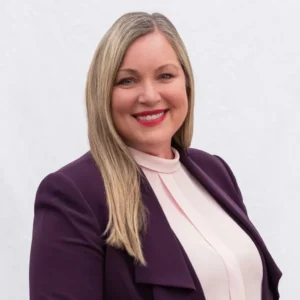
USD Law Professor Alysson Snow
The USD program does not offer full legal representation to tenants, but does provide representation during negotiations, which Snow said has resolved cases 90 percent of the time.
The negotiations often result in a “pay and stay” payment plan, allowing tenants to stay housed and landlords receiving rent.
While the program is focused on helping tenants, Snow said landlords and property owners also appreciate the help in reaching a resolution because the eviction process can take six months or as long as a year.
“We’re able to get people really good deals, and the plaintiff’s attorneys and landlord attorneys are actually grateful, too, because we make their lives a lot easier,” she said. “These negotiations help save the landlords a lot of time and money.”
Because of the high number of eviction hearings each week, the department that hears the cases already has a standing order to require a meaningful attempt to resolve the cases before going to trial.
“So basically, they’re telling you, ‘Go out in the hallway and negotiate,” Snow said.
The program’s team includes Snow, USD law students, and graduates who recently passed the bar exam. On a typical Monday, Snow or others from the program approach people in the hallway before they are called in and ask if they have representation.
“A lot of them have already been engaging in negotiations with opposing counsel before we get involved, so they know the difference between what they were being offered without legal representation and what they were offered and what they ultimately achieved with counsel,” she said.
Eviction laws can be complicated, and Snow said most tenants do not know what the statutes say or the rules about the time period for giving notices, which could require as little as three days or as many as 90 days.
“We haven’t lost any cases, and in most of the cases the tenant gets at least 60 days to be able to find a new place to live,” she said. “And in 100 percent of the cases, nothing is reported on their credit reports, and that’s a huge factor in making sure that people are able to re-rent some place else in the future.”
Snow sees the new on-site negotiations as a more efficient way of helping people facing evictions than the full representation offered by the USD Housing Rights Clinic legal clinic, which required making time for one-on-one meetings with clients facing eviction.
“This cuts out so much time, and we can actually deliver more services because we’re all congregated in one space,” Snow said. “Everybody’s ready, both sides are there, all the attorneys are there. It reduces the amount of time to deliver the services, and any legal services attorney will tell you that time is a very scarce resource.”
The more-efficient use of time has allowed the program to help up to four or five tenants a day, Snow said.
On one recent Monday, Snow had met with a client in a hallway before the court went in session. Once the courtroom doors opened and people filed inside, Snow took a seat in an area reserved for counsel and waited for the judge to get to her client’s case.
Once at the defendant’s table, she told the judge that her client would like to negotiate with the plaintiff, and moments later they were in a side room discussing a possible resolution.
Similar scenes have played out dozens of times since the launch of the program, possibly preventing some people from becoming homeless and creating resolutions Snow said benefit both sides.
Several months into the program, Snow said some clients have remained in their home while most were able to obtain sufficient time and financial resources to have a “soft landing” into a new home.
During that time, the USD program can help tenants find a new home through its partnership with the Housing Justice Collaborative, which provides legal and rental assistance and other services.
“We all get together and we share resources and talk about what’s available to help,” Snow said. “There’s nothing worse than getting time for somebody to move out, and then they can’t find a place.”
As an example of how cases are resolved, Snow said one case was related to noise complaints, and a resolution came through behavior modification and an agreement to make no noise after 10 p.m.
All but three cases have been resolved through negotiations, and the three that went forward ended in judgments on behalf of the program’s clients, Snow said.
Not all clients have been tenants. One woman who was helped in the program was a homeowner facing foreclosure and a ruined credit.
“They went over and beyond,” said the woman, who requested anonymity. “They took my case that exact morning, and they were a tremendous help.”
She and her husband had a car dealership and lived in a home they had owned for 21 years. Their business suffered during the pandemic and they took out a loan with a balloon payment. They fell behind in payments, and under the terms of the loan the final amount became due.
Their attempts at making payments and turning in requested documents were rejected, adding to the family’s uncertainty of what to do.
“Back and forth, every month and a half, I had to send all the documents, and at the same time I was looking for an attorney. I found scammers up in LA who scammed me out of money. It’s a long story. We went through a lot. There’s a lot of supposedly free help out there, but it’s not free.”
The bank foreclosed on the house, but the woman said they never received a notice about when to move out. They hired an attorney and paralegal, but still were lost about what to do on the day they went to court in September to ask for an extension while facing a lawsuit to pay back rent for the time they lived in the house after the foreclosure.
Students from USD approached them at the courthouse, she recalled. While at first it didn’t seem like the right fit since they were not being evicted, Snow agreed they could help.
“When they called my name, Alysson stood up, and she handled the case from there on,” the woman said. “They would have totally destroyed me. They weren’t there to extend the date. I didn’t know what to do at all. Without Alysson’s and the students’ help, I wouldn’t have survived.”
The couple now live in their daughter’s home, and they did not have to pay the thousands of dollars in rent and did not have their credit damaged.