
Nov. 3, 2025
Officials from the city of San Diego, homeless service providers and members of the San Diego River Park Foundation gathered near Sea World on Nov. 3 to mark the one-year anniversary of one of the area’s most successful collaborative efforts at clearing homeless encampments in the region.
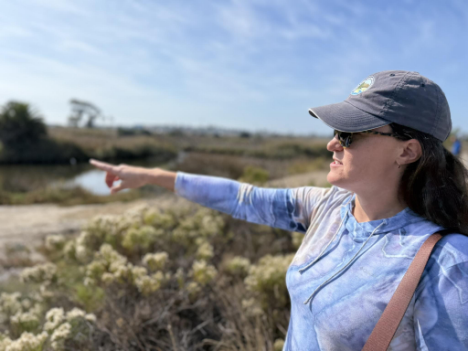
“We had been kind of sounding the alarm about the size of this encampment for a pretty long time because it had been growing and growing, and there was a huge number of folks who were living out here,” said Sarah Hutmatcher, chief operating officer for the San Diego River Park Foundation.
At the time, just over 100 people were living in an area of the San Diego River known as The Island just west of Interstate 5.
Dozens of tents and other makeshift shelters dotted the site, and Hutmatcher said the situation was not only harmful to the environment but also dangerous to the many people who lived there because of frequent flooding.
A months-long outreach at the site resulted in 59 people moving into permanent housing and another 46 enrolling in shelter programs. Crews removed 78 tons of trash and debris from the site, and no one has moved back to the site in the past year.
Money for the project came from a $17 million state Encampment Resolution Fund grant the County of San Diego received in 2023 to address encampments along the San Diego Riverbed.
The city of San Diego received $3.6 million of the grant, with the city of Santee and the California Department of Transportation also receiving a share as part of an overall goal of helping about 300 people transition out of encampments and into permanent housing and services.
The San Diego City Council approved spending the ERF grant in March 2024 and outreach efforts were launched that July.
Hutmatcher said the San Diego River Park Foundation had been conducting surveys in the area since 2007 and had established relationships with some of the people living in the encampment.
“We’ve done some demographic surveys in the riverbed, and we were told that the mean number of years that people had been experiencing homelessness was eight years,” she said. “And when we asked how many of those had been in the riverbed, it was two to four years. Most people do not become homeless and then move into the riverbed immediately.”
Hutmacher said they were happy to do a “warm handoff” of the people in the riverbed to professional outreach workers who could connect them with housing and services.
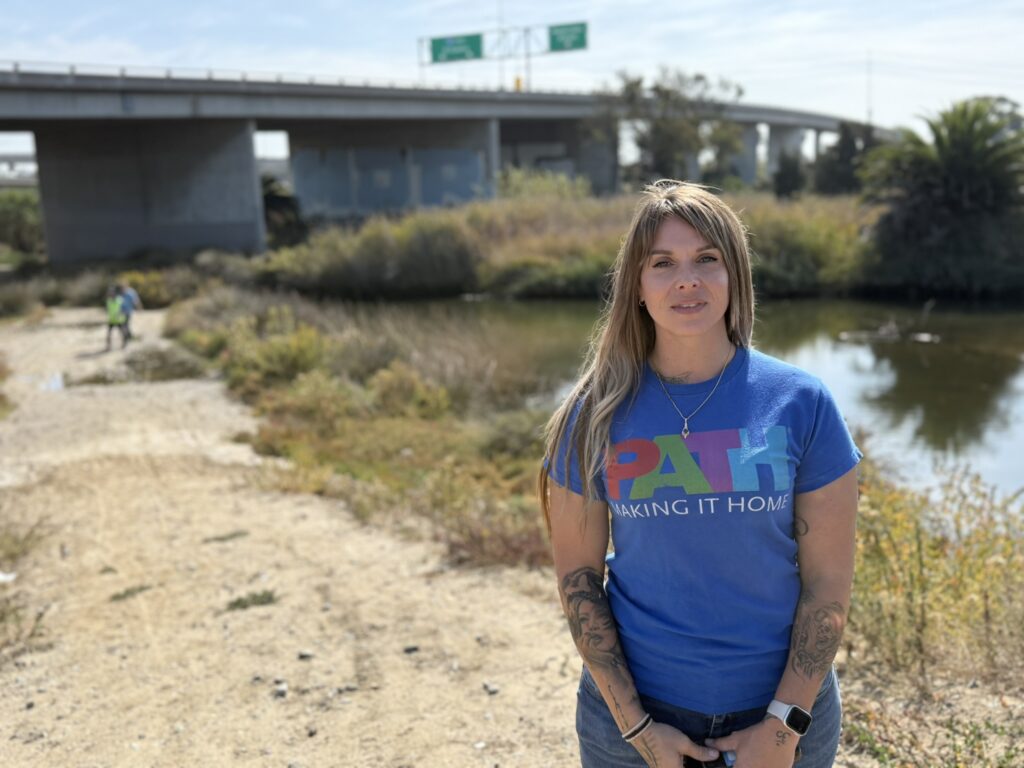
Autumn McCann, Encampment Resolution Fund manager for PATH. Photo by Gary Warth
Autumn McCann, ERF program manager for People Assisting the Homeless, San Diego, recalled what it was like for outreach workers who approached people in the encampment.
“Some were receptive,” she said. Some, it took some time to build that trust with them. But in the end, everybody on the island wanted to end their homelessness and wanted housing.”
PATH has housed 36 of the people who once lived in the riverbed.
The city also partnered with Healthcare in Action during the outreach and contracted with NAMI (National Alliance on Mental Illness) San Diego to assist people as they transition out of encampments and into long-term housing.
The outreach launched in July ran through October and included case management, resource referrals, housing navigation assistance and shelter connections.
Ketra Carter, program manager with the city’s Homelessness Strategies and Solutions Department, said the collaborative effort culminated with people being offered several options in the weeks before the encampment was closed and cleared.
“It wasn’t like your only option was a safe sleeping site,” she said. “And believe it or not, most actually accepted some form of service through those four months.”
As city crews began clearing the site, some people in the encampment pitched in.
“They thought if this really is going to happen, then why not be a part of the solution?” Carter said. “So we provided the trash bags, we provided gloves, and we provided ourselves.”
Signs about the city’s unsafe camping ordinance were posted near I-5 at Friars Road on Nov 1, 24-hour abatement notices were posted Nov. 4, and crews cleared out the remaining tents and debris from Nov. 5 through 8.
The city has continued to provide outreach services and connections to resources for other people living further up the riverbed and will target other areas near the river in the future.
City park rangers conduct frequent patrols of the area, and two park ranger positions have been assigned to patrol the entire San Diego River Valley. The city also continues to work with the San Diego River Park Foundation, which regularly conducts volunteer cleanups in the area.